
Pool Renovation in Bucks County PA: A Straight Answer on Cost, Scope, and Timing
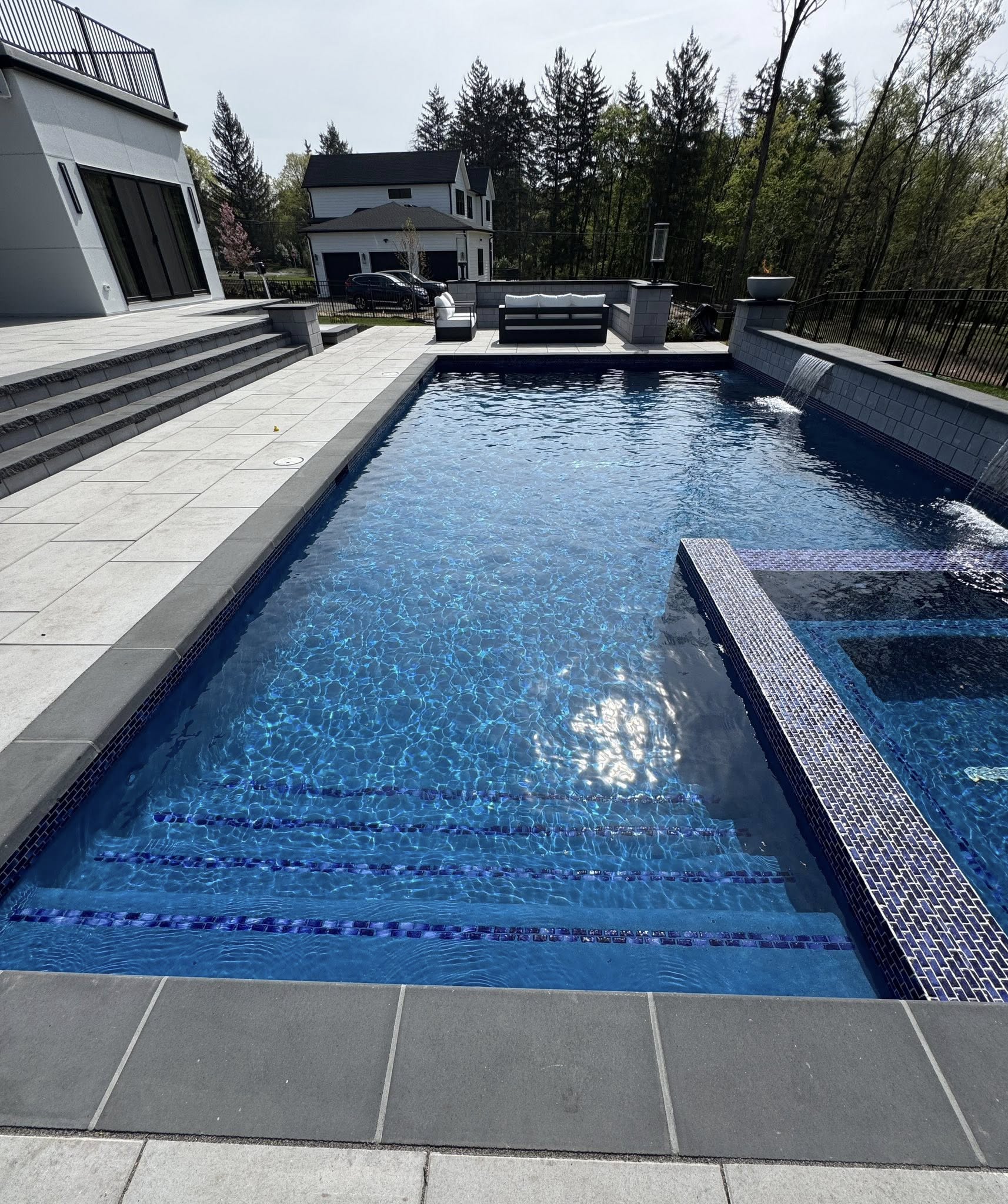
Most people do not call us because their pool broke. They call because it finally started to embarrass them.
The plaster has gone chalky and stains your feet. The coping is cracked and the mortar joints are gone. The concrete deck heaved after one too many freeze cycles and now there is a lip you stub your toe on every July. The pool still holds water. It just looks tired, and the backyard around it looks tired with it.
That is the honest starting point for most pool renovation in Bucks County PA. Not a failure. A slow decline you stopped noticing until a neighbor put in something new.
What Pool Renovation in Bucks County PA Actually Includes
The word covers a wide range, which is part of why homeowners get confused when they collect quotes. One contractor bids $18,000 and the next bids $95,000, and both are technically quoting a renovation.
Here is the practical breakdown.
Surface only. Drain, chip out the failed plaster, re-bond, and apply new interior finish. This is the entry point. If your gunite shell is sound and you like the shape and size of the pool, this is often all you need.
Surface plus coping and tile. The waterline tile and the coping stone take the worst of a Pennsylvania winter. Water gets into a joint, freezes, expands, and pops the stone. Once you are already draining the pool for plaster, redoing coping and tile costs far less than doing it as its own project later.
Full renovation. Surface, coping, tile, new decking, upgraded equipment, and often a new automatic cover or lighting. This is where you also get the chance to fix things that were wrong from day one, like an awkward step entry or a deck that never had enough room for chairs.
Structural remodel. Changing the shape, adding a tanning ledge, converting a diving well, or building an attached spa. Now you are cutting into gunite and shooting new material. It is real construction, and it is priced like it.
The Cost Question, Answered Honestly
Nobody enjoys the “it depends” answer, so here are the ranges we see for pool renovation in Bucks County PA, along with Montgomery County and Chester County.
A straightforward replaster on an average residential gunite pool typically lands in the mid five figures once you include the drain, chip-out, bond coat, finish, refill, and startup chemistry. Add coping and waterline tile and the number climbs meaningfully, because coping is stone work and stone work is slow.
New decking is usually the line item that shocks people. Concrete, travertine, and paver decking all price differently, and the square footage around a pool is almost always larger than the homeowner guessed. Walk it with a tape measure before you assume.
Three things drive price more than anything else:
Access. If we can back a truck to the pool, the job is efficient. If everything has to be wheeled through a side yard gate on a plywood path, labor hours multiply.
What we find when we open it up. A shell that has been patched three times over twenty years hides surprises. We would rather tell you about them than paper over them.
Finish selection. Standard white plaster and a premium aggregate finish are not close on price, and they are not close in lifespan either.
For a deeper look at the numbers on new construction, our guide on how much an inground pool costs in PA walks through the same logic applied to a build from scratch.
Signs You Are Past Due
Some of these are cosmetic. Some are not. Any one of them is a reason to price a pool renovation in Bucks County PA before the next freeze cycle makes it worse.
Rough or chalky plaster that scrapes skin means the surface has lost its finish and is now exposing the substrate. Persistent staining that acid washing no longer touches is the same story.
Cracked or loose coping stones let water behind the beam. That is a slow leak waiting to happen.
Rust bleed from behind the tile is a warning. It usually means the steel in the shell is being reached by water.
A heaved or settled deck is a trip hazard and a drainage problem. Water that used to run away from the pool is now running toward it.
Equipment that runs constantly and still cannot hold clarity is a pump and filter conversation, and it belongs in the renovation scope rather than as a separate emergency in August.
Gunite, Fiberglass, and What Can Be Renovated
Gunite pools are the workhorses of pool renovation in Bucks County PA because the shell is essentially permanent and the interior surface is a wear item by design. Resurface it every fifteen to twenty years and the pool outlives the house. Our custom concrete gunite pool page covers how the shell is built and why it behaves this way.
Fiberglass is different. The gelcoat surface can be refinished, but the shell is a molded shape, so you cannot change the footprint. If you want a bigger pool, you are talking about a replacement, not a renovation. Our fiberglass versus gunite comparison explains the tradeoffs that matter here.
Vinyl liner pools have their own cycle. Liners are a replacement item every eight to twelve years, and the underlying wall panels are where the real inspection happens.
Timeline: Plan Backward From Memorial Day
This is the part almost everyone gets wrong.
A surface-only renovation is typically two to four weeks of active work, weather permitting. Add coping, tile, and decking and you are realistically looking at six to ten weeks. A structural remodel with a new spa or a reshaped pool can run a full season.
The mistake is calling in April. By then the schedule is full and the good crews are booked. The homeowners who swim in June are the ones who called the previous fall.
Fall and winter are also better for the work itself. Plaster cures more predictably in moderate temperatures, and there is no pressure to rush a finish so the family can get in the water.
Our post on how long it takes to build an inground pool in Montgomery County covers scheduling realities that apply just as much to renovation work.
Renovate the Pool, or Renovate the Whole Backyard
Here is a tradeoff worth thinking through before you sign anything.
If your pool needs surface work and your deck is also failing and you have always wished the seating area were bigger, do it once. Mobilizing equipment, protecting the yard, and running crews are fixed costs. Splitting the same work across three separate years costs more in total and disrupts three summers instead of one.
The homeowners who end up happiest are usually the ones who treated the renovation as a backyard project rather than a pool repair. Our backyard patio and pool design page shows what that looks like when the pool and the hardscape are planned together, and our outdoor living work covers the kitchens, fire features, and lighting that turn a pool into a place people actually spend evenings.
Choosing Who Does the Work
Pool renovation punishes shortcuts more than new construction does, because you are working on top of somebody else’s decisions.
Ask whether the contractor will chip out the old surface completely or bond over it. Bonding over failed plaster is faster and cheaper and it will fail again. Ask who does the coping, because stone work is a different trade than plaster. Ask to see a pool they resurfaced five years ago, not five months ago.
Our guidance on choosing a pool contractor in Bucks County and Montgomery County goes deeper on the questions that separate a good bid from a cheap one. And once the work is done, our inground pool maintenance guide for PA owners will help you protect the investment through the next freeze cycle.
Ready to Look at Your Pool?
We handle pool renovation in Bucks County PA, plus Montgomery County and Chester County, from a single replaster to a full structural remodel with new decking and outdoor living space.
Send us photos of the pool, the coping, and the deck. We will tell you honestly whether you are looking at a surface job or something bigger, and what the realistic number and timeline look like.
Request a renovation consultation and let’s get you on the fall schedule.
FAQs
How much does pool renovation cost in Bucks County PA?
A surface-only replaster typically runs in the mid five figures for an average residential gunite pool. Adding coping, waterline tile, and new decking pushes the total significantly higher. Access to the yard, the condition of the existing shell, and your finish selection drive the number more than pool size does.
How often does a gunite pool need to be resurfaced?
Most gunite pools need a new interior finish every fifteen to twenty years, though water chemistry history matters. A pool that ran aggressive water for a decade will show wear sooner. Chalky, rough, or persistently stained plaster that no longer responds to acid washing is the signal.
Can you change the shape of an existing pool?
Yes, if it is gunite. Adding a tanning ledge, an attached spa, or reshaping a step entry means cutting into the shell and shooting new material, so it is priced as construction rather than as a surface job. Fiberglass shells are molded and cannot be reshaped.
When should I schedule a pool renovation?
Call in the fall for work the following spring. Crews book out early, and plaster cures better in moderate temperatures than under summer pressure. Homeowners who wait until April usually end up swimming in August.
Do I have to replace my pool deck at the same time?
Not always, but it is worth doing together. Mobilization, yard protection, and crew scheduling are fixed costs, so combining surface work and decking into one project costs less overall than splitting them across separate seasons.


